The mixed reality world is finally getting hot, and 2025 could potentially be the year it blows up into the mainstream. Two of the largest technology giants—Samsung and Apple—have entered the scene with their new next-generation devices: the Samsung Galaxy XR and the Apple Vision Pro (M5). Both headsets aim to revolutionize how we engage with digital realms, integrating reality with rich 3D worlds. But how do the two giants compare in terms of power, display, comfort, and overall experience? We shall see in this in-depth comparison.
The Race for Spatial Dominance
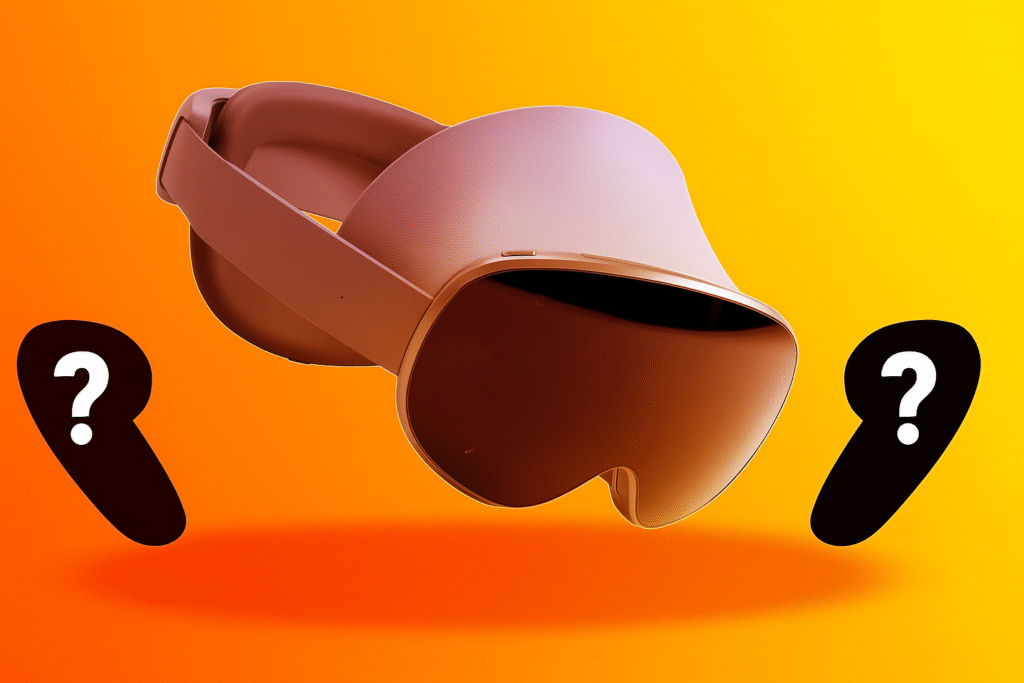
Apple made headlines in early 2024 with the original Vision Pro, calling it a “spatial computer.” Now, in 2025, the company has taken things even further with an updated model powered by its new M5 chip. Meanwhile, Samsung—backed by Google and Qualcomm—has unveiled the Galaxy XR, a direct challenger built to deliver high-end mixed reality at nearly half the price.
Both companies are approaching the XR (Extended Reality) market differently. Apple aims for luxury, precision, and ecosystem control, while Samsung offers openness, AI-driven interactivity, and value. The result? A fascinating face-off between two different visions of the future.
Design & Build Quality: Comfort Meets Craftsmanship
Apple Vision Pro (M5) carries on Apple’s legacy of high-quality materials and build quality. It has an aluminium frame, laminated glass front, and a soft dual-knit headband. Yet, tipping the scales at approximately 750–800 grams, it is not exactly lightweight. Apple’s revised dual-band design and improved weight distribution make it slightly more comfortable than the original, yet still weighs noticeably during long use.
Samsung, however, engineered the Galaxy XR for comfort. The headset itself weighs a mere 545 grams, while an external battery pack (approx. 300 g) is attached with a wire. With this split design, head strain is greatly minimized and longer use more comfortable. The design is sleek, minimalist, and unmistakably Samsung—space age but functional.
Verdict:
- Apple: Sleek and premium but heavy.
- Samsung: Lighter and better balanced, perfect for prolonged sessions.
Display & Visual Performance
Visual quality determines the mixed reality experience, and both headsets advance the state of display technology.
The Samsung Galaxy XR features dual micro-OLED screens with a combined resolution of about 3,552 × 3,840 pixels per eye for a total of approximately 29 million pixels—a staggering number that even exceeds Apple’s previous models. The screen goes up to 90 Hz for smooth and rich visuals. Samsung also guarantees an extensive field of view (~109° horizontal) for a thoroughly immersive experience.
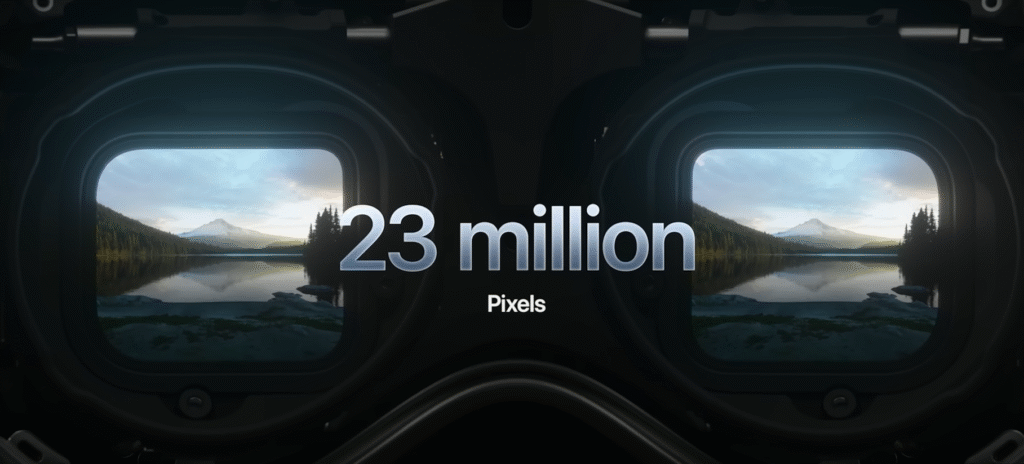
The Vision Pro (M5) incorporates Apple’s hallmark micro-OLED 3D display technology with approximately 23 million total pixels and refresh rates that now support up to 120 Hz—a huge jump from the M2 generation. The higher refresh rate, combined with Apple’s high-end motion processing and color accuracy, provides realistic graphics and minimized motion blur.
Verdict:
- Samsung: Improved resolution and field of view.
- Apple: Higher refresh and color calibration.
Performance & Processing Power
This is where Apple really flexes its silicon muscle. The new M5 chip boasts a 10-core CPU, 10-core GPU, and a 16-core Neural Engine, all based on a 3 nm process. The outcome is silky-smooth multitasking, sophisticated AI processing, and spatial rendering without the need for juggling. It can run high-end apps, multitask several windows, and even handle real-time ray tracing.
Samsung’s Galaxy XR is powered by Qualcomm’s Snapdragon XR2+ Gen 2 platform, which has already shown its performance chops in high-end mixed reality products. It’s speedy, power-efficient, and optimized for Android XR but not quite as much raw horsepower as Apple’s M5 chip—particularly graphics rendering or AI tasks.
Verdict:
- Apple: Supreme in raw horsepower and AI.
- Samsung: Capable and efficient, but nowhere near the M5.
Software & Ecosystem
Software integration is where Apple’s closed environment excels. The Vision Pro is powered by visionOS, a spatial operating system that works beautifully with iPhones, Macs, and iPads. Users can take their Mac screen and turn it into an enormous floating workspace, utilize eye and hand tracking for effortless control, and enjoy an expanding library of spatial apps through the App Store.
By way of contrast, Samsung Galaxy XR operates with Android XR, developed in partnership with Google. It’s open to customization and geared to openness, so developers can freely port Android apps to spatial environments. The One UI XR interface is straightforward, seamless, and optimized for Google Gemini AI, with smart interactions such as gesture control and contextual voice aid.
Verdict:
Apple: Integrated and refined experience well-suited to Apple consumers.
Samsung: Open, customizable, and AI-fueled for Google users.
Battery Life & Connectivity
Battery life is a weak point for both headsets. The Galaxy XR has around 2 hours of mixed usage and 2.5 hours of video playback with its external battery. The benefit? You can hot-swap batteries or use the headset while it’s plugged in.
The Vision Pro (M5) modestly enhances battery life—about 2.5 hours of continuous use and 3 hours of video viewing—due to the M5 chip’s efficiency. Yet it still employs a tethered external battery, and the headset cannot be wirelessly powered for more than short sessions.
Connectivity-wise, Samsung leads with Wi-Fi 7 and Bluetooth 5.x for future-proof wireless. Apple maintains Wi-Fi 6 and Bluetooth 5.3—more than sufficient but behind Samsung’s newer standards.
Verdict:
- Battery: Almost tied—Apple edges in on efficiency, Samsung on versatility.
- Connectivity: Samsung leads with Wi-Fi 7 support.
Sensors, Tracking, and Input
Both headsets are packed with high-end sensors for tracking and spatial awareness.
Apple’s Vision Pro incorporates an advanced suite of cameras, LiDAR sensors, and eye-tracking technology, providing pixel-perfect spatial mapping and natural control with no controllers. It is the reference point for accuracy.
Samsung’s Galaxy XR keeps pace with Apple in most respects with 6DoF tracking, dual cameras, eye tracking, and hand gesture recognition. It further includes iris recognition for unlocking and customization, which Apple does not.
Verdict:
- Apple: More mature and refined tracking ecosystem.
- Samsung: Competitive tracking with added biometric security.
Price & Value for Money
Here’s where things get interesting. The Apple Vision Pro (M5) starts at $3,499, while the Samsung Galaxy XR launches at just $1,799—almost half the cost. For most consumers, that difference is enormous.
Apple justifies its price with premium build, unmatched integration, and next-level performance. Samsung, however, delivers about 80-90% of the same experience at a much more affordable cost.
Verdict:
- Apple: For pro users and Apple die-hards who demand the best of both worlds.
- Samsung: For enthusiasts who desire top-of-the-line performance without breaking the bank.
Final Verdict: Which One Should You Get?
The Samsung Galaxy XR and Apple Vision Pro (M5) are the crème de la crème of mixed reality technology in 2025—but they’re for different users.
Select the Apple Vision Pro (M5) if you’re already committed to the Apple ecosystem and value performance, polish, and seamless integration. It’s the productivity, design, and immersive entertainment powerhouse—albeit at a high cost.
Opt for the Samsung Galaxy XR if you desire phenomenal visual quality, slender comfort, state-of-the-art connectivity, and AI-aided Android freedom—without racking up the expenses. It’s a perfect gateway to premium XR.
Conclusion
The war between Samsung Galaxy XR and Apple Vision Pro (M5) is less about who’s “better” and more about which future you’re willing to believe in. Apple’s Vision Pro seeks to master the art of spatial computing in a walled garden. Samsung’s Galaxy XR, on the other hand, opens the gates to a more democratized, AI-driven reality.
Either way, 2025 is going to be the year that mixed reality comes into its own—and both of these headsets are at the forefront.