Samsung’s name has become synonymous with breaking barriers—from the Galaxy Fold to the latest concepts of a rollable display, it keeps pushing the limits of what can rightly be described as a smartphone. Its latest innovation, the Galaxy Z TriFold, pushes that ambition even further with a triple-folding design. But this time, Samsung will be cautious. According to multiple reports, the TriFold will be in very limited production, making it one of Samsung’s rarest and most experimental devices yet.
A New Form Factor with a Cautious Launch
According to sources from Gadgets360, Wccftech, and SamMobile, Samsung is preparing to make just 20,000 to 30,000 Galaxy Z TriFold units in the initial production run. That’s an incredibly small run compared to the company’s regular flagship production volumes.
The reason for this is pretty straightforward: Samsung wants to gauge the response before scaling up production. The company isn’t really sure if people will actually like the triple-fold design due to its complexity and cost. So, it’s selling the device selectively in regions like South Korea and Singapore, with no confirmation of a global launch in sight. For buyers in larger markets like India or the U.S., TriFold will continue to be a luxury import in the initial days, at best.
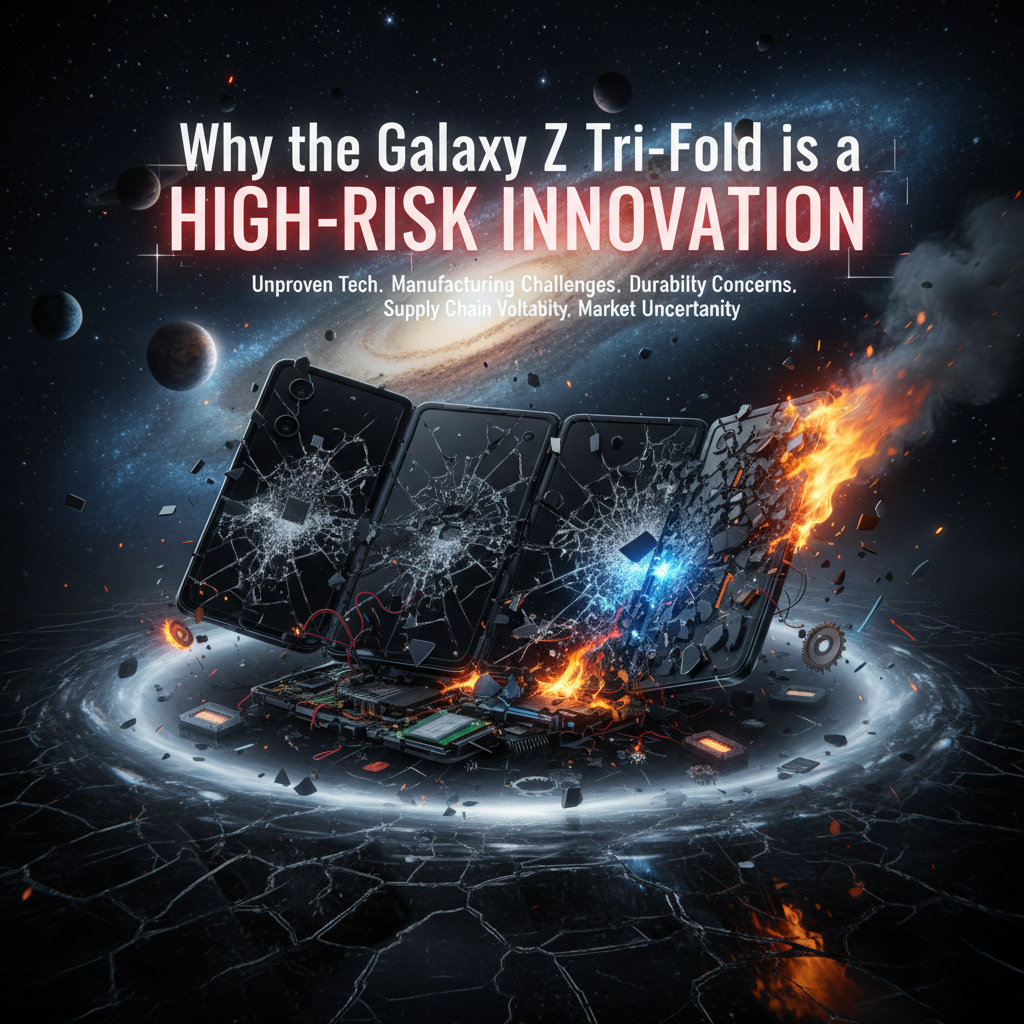
Why the Galaxy Z TriFold is a high-risk innovation
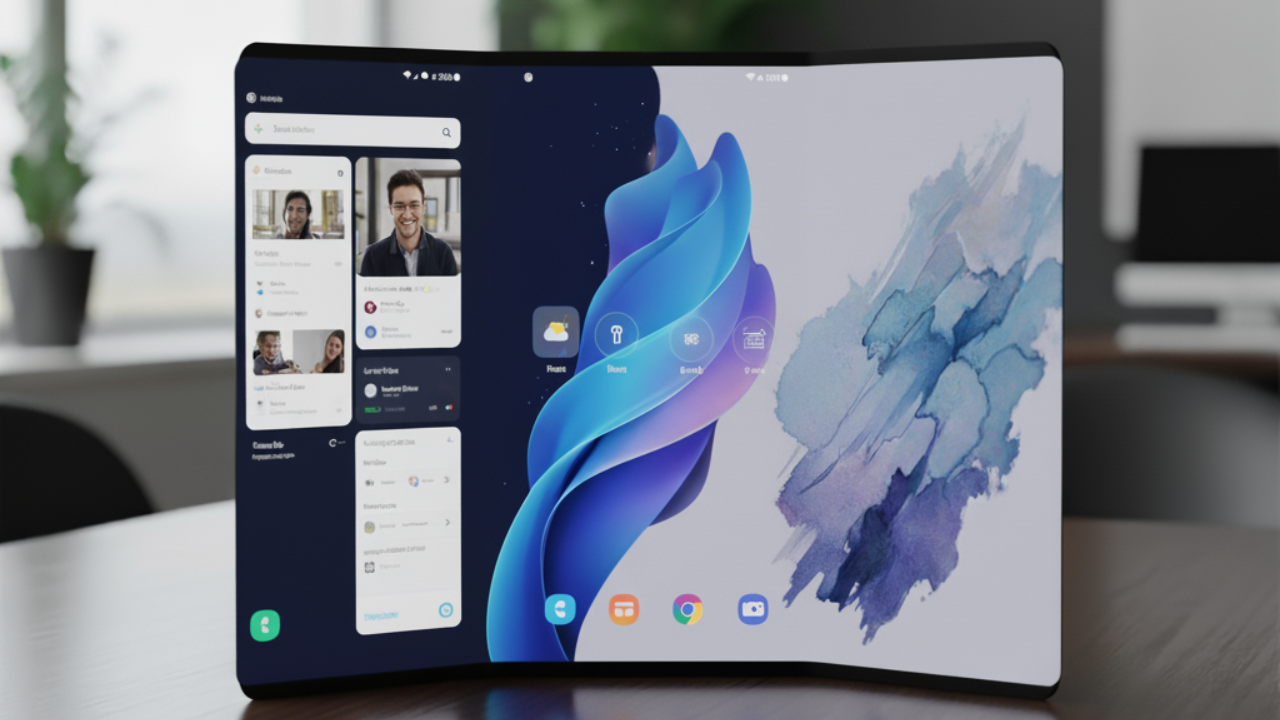
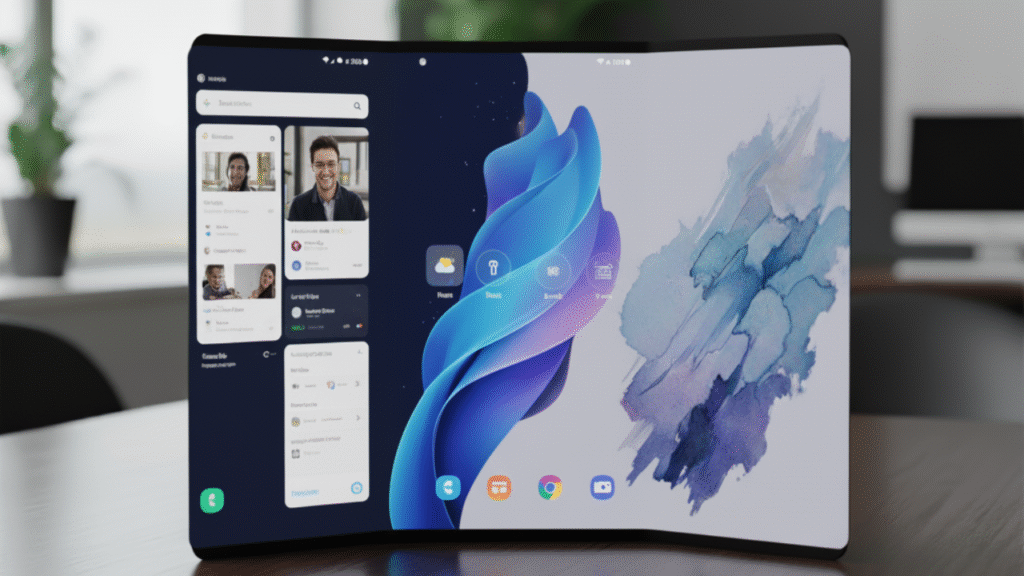
Building a device that folds twice instead of once introduces a whole new level of engineering difficulty. That dual-hinge system can open out into a tablet-sized display, then fold into a compact phone form. Such innovation doesn’t come cheap, though—neither in manufacturing nor in pricing.
Reports have indicated that the TriFold could cost over $2,000, around ₹1.6 lakh, to place it way beyond most flagships. The design involves very precise assembly, advanced hinge mechanics, and specialized display materials—all costly elements in production.
The tri-fold concept has also not been tested in real-world conditions, and its durability, battery longevity, and long-term usability remain a mystery. In the case of Samsung, the small-batch production will mitigate potential issues ahead of time before large-scale manufacturing.
Samsung’s Strategy: Innovate Without Overexposing
This limited-run approach reflects the evolving strategy of Samsung towards innovation. The brand isn’t shying away from big ideas; it is just being more strategic in the way it releases them.
By making small batches of Galaxy Z TriFold, Samsung can:
- Assess durability and hinge performance through early adopters.
- Gather feedback from consumers to improve the concept at future iterations.
- Protect against inventory risks if the model sees limited demand.
Maintain brand prestige, with exclusivity for tech enthusiasts.
This also keeps Samsung in a leading position regarding continued innovation in the foldables space. Even if the TriFold does not lead to mainstream success, it makes sure Samsung retains its pioneer status for flexible display technology ahead of brands like Huawei, Honor, and Xiaomi, which are still working on refining prototypes for dual folds.
What Buyers Can Expect
Given its very rare nature, Galaxy Z TriFold will likely be available only through exclusive channels or select flagship stores. Early adopters should expect limited stock, premium pricing, and possibly long waiting periods.
Although full specifications are not yet revealed, some leaks and prototypes displayed at events like MWC 2023 suggest some features, including
- A large OLED display that folds twice for multi-angle usage.
- Improved hinge durability, along with smoother folding mechanics.
- Support for the S Pen appeals to professionals and creators alike.
- High-quality materials created for multiple folds.
The downside of that, however, is that limited production could very well mean limited long-term support, with fewer replacement parts or software updates if the model doesn’t eventually evolve into some sort of regular series.
Final Words
The Galaxy Z TriFold is perhaps one of the most daring experiments in modern smartphone history, an amalgamation of design ambition and cautious business strategy. Producing only 20,000 to 30,000 units signals that Samsung isn’t chasing immediate profits with this model; it’s testing the boundaries of what’s possible in foldable technology.
If it finds success, the TriFold will have opened the door to a whole new generation of devices: those that bridge the gap between phones, tablets, and laptops. And if it doesn’t, it still will constitute a milestone of sorts—the proof of how far Samsung is willing to go to innovate. It’s almost an unusual move in an industry predicated on safe upgrades, but the Galaxy Z Tri-Fold is a leap of faith into the unknown. Mainstream hit or collector’s item, one thing is certain: Samsung is rewriting the shape of the smartphone once more—literally.