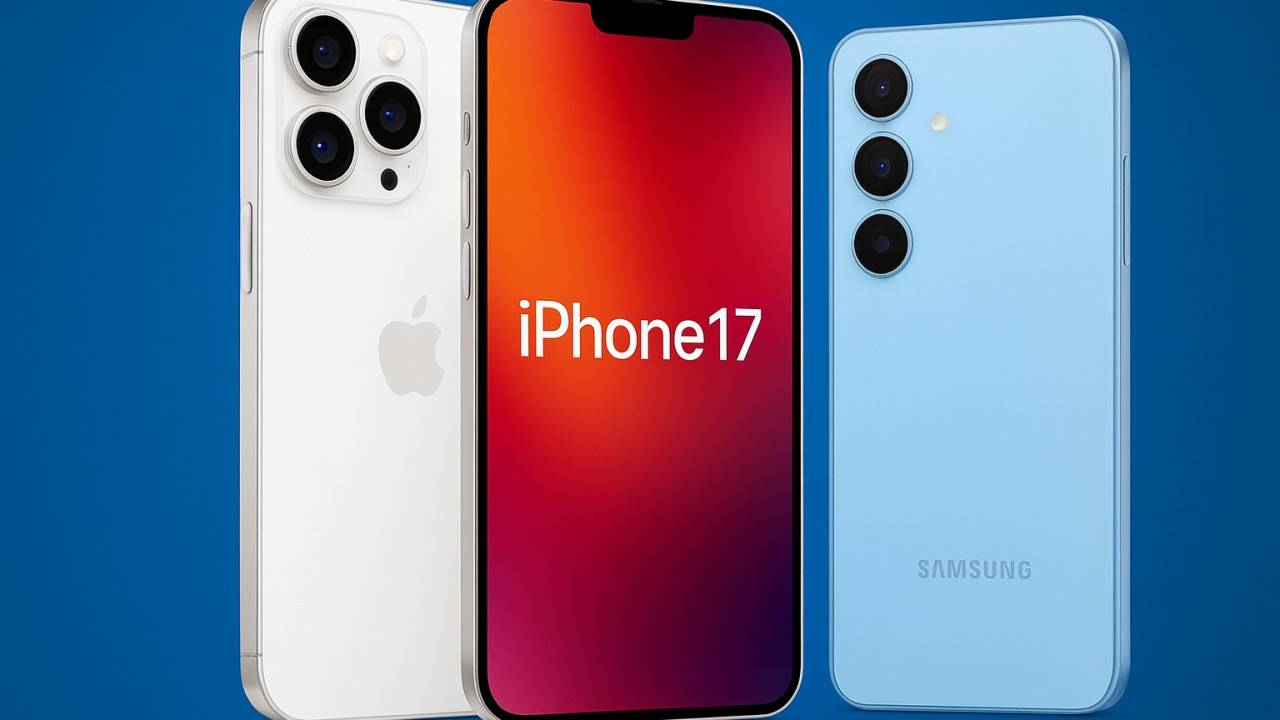
Apple is well on its way to making history in the global smartphone market. New forecasts from Counterpoint Research indicate that the company is expected to Apple surpass Samsung 2025, with the strong performance of the newly launched iPhone 17 series being a key driving factor. If the projections hold good, this will be the first time in 14 years—that is, since 2011—that Apple gains the undisputed global lead in smartphone shipments.
The global smartphone market is forecasted to recover by 2025 with a year-over-year increase of 3.3%. But the bigger story is all about the change in leadership. Long dominant in revenue and profits, Apple has seldom taken the crown in overall shipments. Now, strong upgrade cycles, with growing demand for premium phones and record-setting sales of the iPhone 17, might finally make this happen.
iPhone 17 Sparks a Huge Upgrade Cycle
The iPhone 17 lineup launched in September 2025 is already shaping up to be one of Apple’s most successful releases in recent history. Early sales indicate:
- 12% more sales in the U.S. compared to iPhone 16
- 18% higher sales in China, one of Apple’s most competitive markets
- A robust global response from both new buyers and upgraders
Analysts characterize the year 2025 as an “inflection point” in the replacement cycle. Millions of users who bought phones during the COVID-19 era are ripe for upgrades, and Apple seems to be capturing a lion’s share of that wave. Some 358 million possible buyers, or those with older or second-hand iPhones, could upgrade between 2025 and 2027.
Shipment Forecast 2025: Apple vs Samsung vs Global Market
To put Apple’s rise into perspective, here’s a quick look at projected 2025 smartphone shipments:
2025 Smartphone Shipment Forecast by Counterpoint Research
Brand | Projected Shipments (2025) | Market Share (2025) | Trend
- Apple | ≈243 mln units | 19.4% | Strong growth driven by iPhone 17
- Samsung | ≈235 mln units | 18.7% | Slight decline in premium dominance
- Global Market | ≈1.2 billion units | — | 3.3% YoY growth
This is a significant shift because Samsung has held the global shipments crown for over a decade. Even though Samsung is expected to grow shipments by around 4.6%, Apple’s momentum is simply stronger.
Why Samsung Is Falling Behind
While Samsung is still a force to be reckoned with on the global stage, the premium segment—where the real profits and long-term customer loyalty reside—is slowly but surely falling toward Apple.
Here’s why Samsung may slip to the No. 2 position:
- Apple’s dominance in the premium and ultra-premium categories
- Slower replacement cycles for Samsung’s mid-range phones
- Pressure from Chinese brands in emerging markets
- Rising component prices hit non-premium OEMs
While Samsung has been leading in foldable devices, the category still represents a small fraction of global shipments—nowhere near enough to counter Apple’s mainstream appeal.
Apple surpass Samsung 2025: Can Apple Keep Its Lead?
But some analysts don’t believe that will be temporary, and they predict Apple can stay at No. 1 until at least 2029, if the market remains stable. A few products arriving throughout the coming years could help Apple sustain the momentum:
- A rumored affordable “iPhone 17e”
- The company’s first foldable iPhone, expected around 2026–2027
- Continued expansion in India and Southeast Asia
Moreover, customers remain deeply locked into Apple’s ecosystem—a major advantage which Samsung and Chinese OEMs struggle to replicate.
Final Thoughts
The smartphone landscape is at the cusp of a transformative phase. Apple’s iPhone 17 series isn’t just a successful product; it’s a catalyst that might rewrite global market leadership after more than a decade. With projected shipments of 243 million, strong global demand, and a massive upgrade cycle underway, Apple’s rise to pole position does seem like an inevitability. Samsung will still be a formidable rival, but 2025 may be a tipping point that sees Apple finally become the world’s largest smartphone maker by shipments.