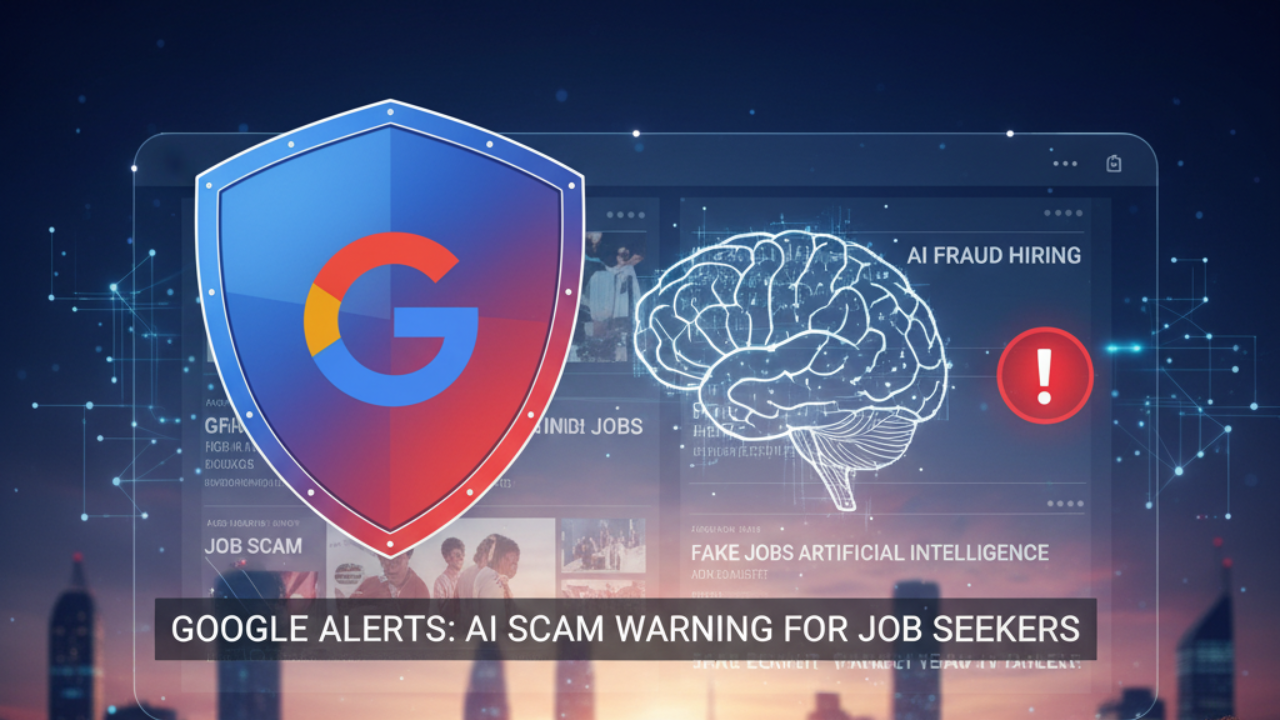
In a new safety advisory, Google has sounded the alarm on a growing wave of AI-driven scams targeting both job seekers and businesses. Google Alerts Job Seekers by reports that fraudsters have begun to use generative AI tools to generate credible fake job offers, cloned company websites, and even impersonated apps to steal sensitive information or money.
These scams, posing as genuine recruiters and business profiles, are getting smarter, faster, and more difficult to recognize due to the trends in AI technology growth and online job platforms.
The Rise of AI-Powered Scams
With the advent of AI, it has turned out to be a double-edged sword: while it powers innovation across workplaces and in technologies, on the other hand, it arms scammers with the newest ways to deceive victims. The latest advisory from Google highlighted that criminals now use AI-powered chatbots, text generators, and image synthesis tools to create realistic job postings and communications that are nearly indistinguishable from the real thing.
That means job seekers will have to contend with phony recruiters and HR people who sound professional, draft slick emails, and can create cloned career websites that make the fake jobs look real. Most of these begin with enticing job offers over professional platforms or through social media, enticing candidates to disclose personal information, pay for “processing fees,” or download “interview software.”
Google said these attacks have increased as working remotely and online hiring have become more common. These scammers took advantage of the applicants’ hope and urgency to get hired and failed to research the company further.
How Businesses Are Being Targeted
Businesses are not spared either. Among the most distressing trends, according to Google, is “review extortion”: a tactic whereby fraudsters post several fake negative reviews about a business online and subsequently demand payment to have them taken down.
These fraudulent reviews can affect a company’s credibility and the extent of online visibility. It is very crucial for small businesses, since their customer perception depends on ratings on Google Maps and Business Profile.
Others involve phishing by impersonating either AI tools or VPN services offering special access and/or better visibility, but instead, they will deliver malware or sign users up for hidden subscriptions.
Why AI Has Made Scams Harder to Detect
Traditional phishing or fraud usually contained tell-tale signs: misspellings, awkward grammar, or mismatched domain names. But generative AI eliminates many of these clues. Fraudsters can automatically generate personalized emails, mimic company tone, and even generate cloned images and logos.
AI also enables scammers to quickly scale operations. Instead of hand-crafting every fake message, they can automate tens of thousands of realistic phishing attempts with AI scripts. Not only does this increase the volume, but it also makes each scam different enough to get past spam filters or fraud detection systems.
Google’s Response and Safety Measures
In view of these increasing attacks, Google has implemented various new AI-based protective measures:
- Improved Safe Browsing: Google has also updated its Safe Browsing system to detect AI-crafted phishing links and other fake career pages more efficiently.
- Play Store policies: Stricter rules of verification are being applied to apps listed on the Play Store, specifically those claiming AI or job-related services.
- Real-time detection of scams: Gmail and Google Messages boast new algorithms that flag suspicious attachments or impersonated sender identities in real time.
- Business profile protection: Businesses can directly report “review extortion” now, and Google promises faster takedowns of fake content or fraudulent profiles.
These efforts signal Google’s increasing dependence on AI—both as a source of innovation and as a means of self-defense against AI-enhanced criminality.
What Job Seekers Can Do to Stay Safe
If you are currently job hunting, here are some tips from Google that can help you protect yourself from AI-based recruitment scams.
- Never pay for a job application; no real employer will ever ask for fees, deposits, or software installation before hiring.
- Verify recruiter identities. Cross-check the recruiter’s email and LinkedIn profile against the official company website.
- Verify URLs carefully. Most fake career sites make use of look-alike domain names or extra characters, such as “micros0ft-careers.com.”
- Do not download any interview tool unless verified by the official employer, because some fake interview software steals login credentials.
- Use MFA for all professional and email accounts to prevent unauthorized access.
How Businesses Can Protect Their Reputation
For small and medium-sized businesses, proactive digital vigilance becomes fundamental in:
- Regularly monitor your business profile for fake reviews or impersonation.
- Claim your brand name and domain variations to prevent clone sites.
- Educate your team and customers on the signs of scams.
- Flag review extortion or phishing attempts using Google’s reporting tools.
Google also recommends that businesses communicate to customers about official channels directly so that scammers have fewer opportunities to take advantage of confusion.

The Bigger Picture: AI and Cybercrime
The rise of AI-powered scams underlines one important problem: the weaponization of technology. As generative AI gets more powerful, cybercriminals can now easily clone voices, create fake videos, or even mock video interviews.
While experts believe that AI scams in the near future will go beyond text and email to video calls, social media content, and even voice impersonation, Google’s warning gives an early signal for both users and enterprises to invest in stronger cybersecurity measures.
Final Thoughts
Google’s warning is timely and necessary. As the world becomes increasingly digital, trust is getting harder to maintain—and the scammers are using AI to exploit that trust. The best defense lies in awareness, verification, and consistent online hygiene. AI might make scams smarter, but an informed user can always be one step ahead.