AI Mobile Photography in 2025: Smartphone cameras are no longer about megapixels and lenses—they’re about machine learning, processing power, and what artificial intelligence (AI) looks at through your lens. With AI now deeply integrated in image capture, processing, editing, and even storytelling, AI mobile photography is now at its new golden era—where your phone doesn’t only take a photo, but it knows what it represents.
In this in-depth look, we’ll observe how AI is revolutionizing smartphone photography—ranging from bleeding-edge portraits to live scene optimization and mind-boggling editing capabilities. You’re either a hobby snapper or AI mobile photography aficionado; you’ll need to know what AI has cooking behind the camera in 2025.
The Shift from Optics to Algorithms
For years, improved smartphone photography has meant more cameras, bigger sensors, and higher resolution. Hardware reached a plateau, though. That’s when AI stepped in and flipped image quality on its head.
- Today, large companies like Apple, Google, Samsung, and Xiaomi employ powerful AI algorithms to calculate images frame by frame.
- Rather than focusing solely on glass lenses, phone makers now use neural engines and dedicated AI processors (like Apple’s Neural Engine or Google’s Tensor G3) to make the image better than the optics could do it alone previously.
What’s Really Happening with AI Behind the Lens
Let’s break down some of the most significant ways AI is transforming mobile photography in 2025:
1. Scene Detection & Real-Time Adjustments
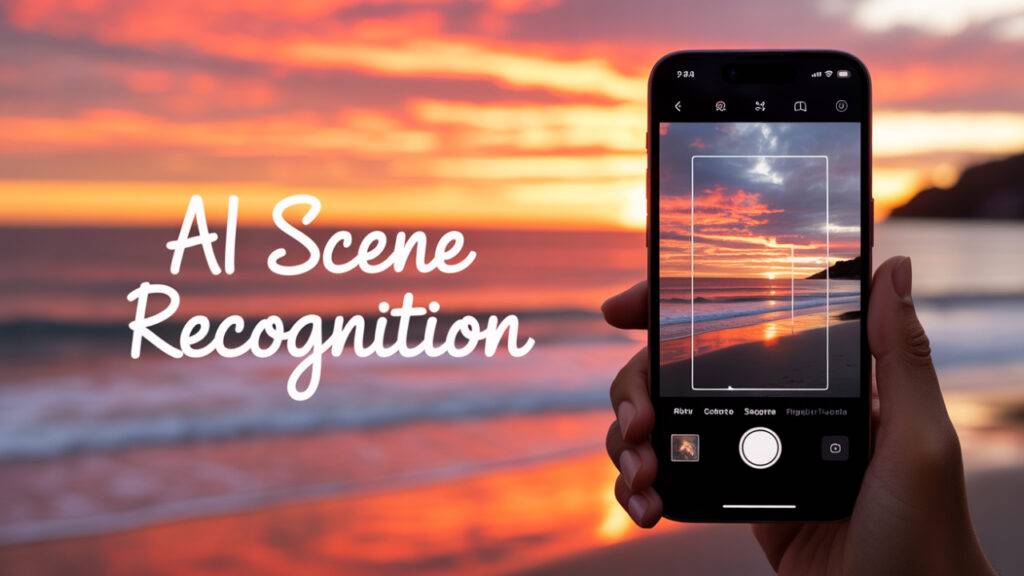
AI Mobile Photography in 2025: As soon as you open your camera app, your phone already knows what it’s looking at.
- AI detects scenes like landscapes, food, pets, documents, or low light.
- It automatically changes white balance, exposure, ISO, HDR, and saturation depending on what it’s looking at.
- In 2025, multi-frame merging does the job in milliseconds to blend the best of a succession of exposures before you’ve even pressed the shutter.
- Example: Point your phone at a platter of sushi, and the AI boosts texture, color saturation, and sharpness—all without excess.
2. Night Mode & Low-Light Photography
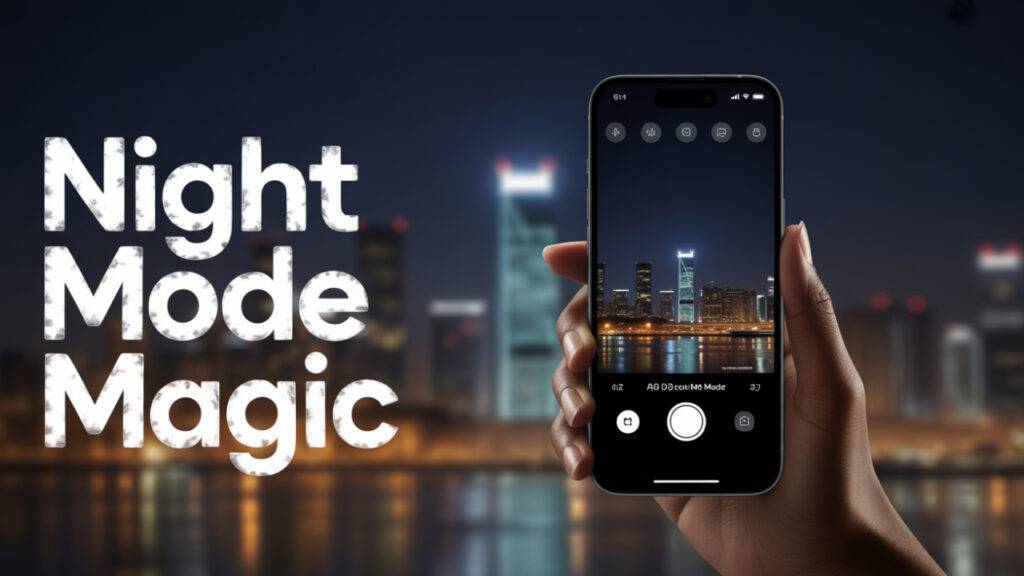
AI Mobile Photography in 2025: Night photography was the Achilles’ heel of phone cameras. Not anymore.
AI-driven features like:
- AI Night Vision: Utilizes frame stacking and noise reduction to brighten up dark scenes.
- Motion Detection: Preserves subject sharpness even during handheld night shots.
- AI Scene Separation: Shields foreground from background to reduce blur and enhance detail.
By 2025, phones like the Pixel 9 Pro or Galaxy S26 Ultra can capture noise-free, sharp pictures of a cityscape at midnight with ease.
3. Portrait Mode and AI Bokeh Effects
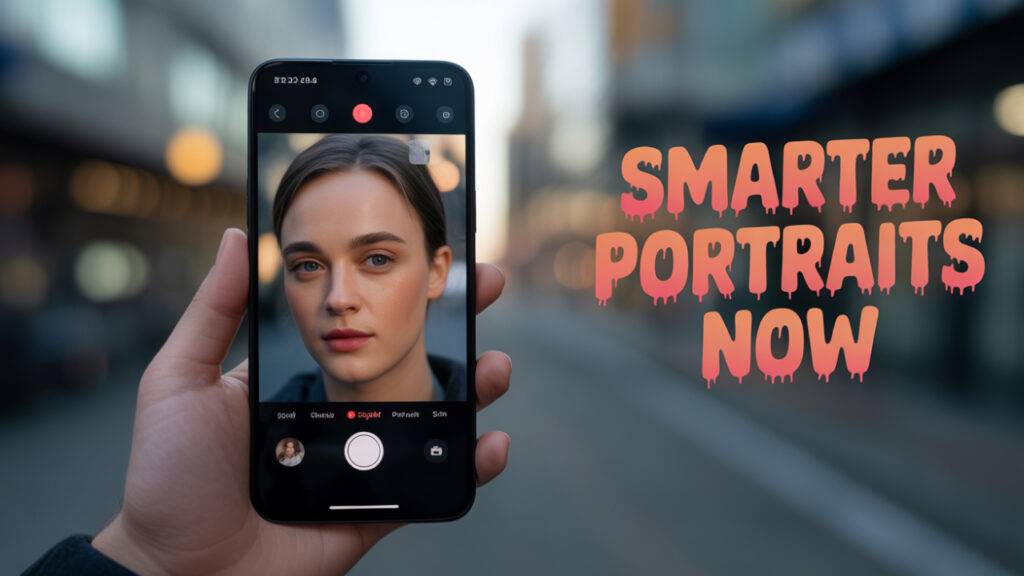
AI Mobile Photography in 2025: Until now, dual cameras in portrait mode simulated depth. With AI depth mapping, single-camera configurations provide DSLR-quality bokeh now.
This is how it goes:
- Millions of images are analyzed by AI models to identify edges, hair, and fine details.
- Your phone uses neural segmentation to detect background and subject.
- AI allows manual refocusing of bokeh even post-capture.
Bonus in 2025: Certain phones today feature “AI Cinematic Blur,” where depth is calculated in real-time even for video.
4. AI Photo Editing & Improvement Tools
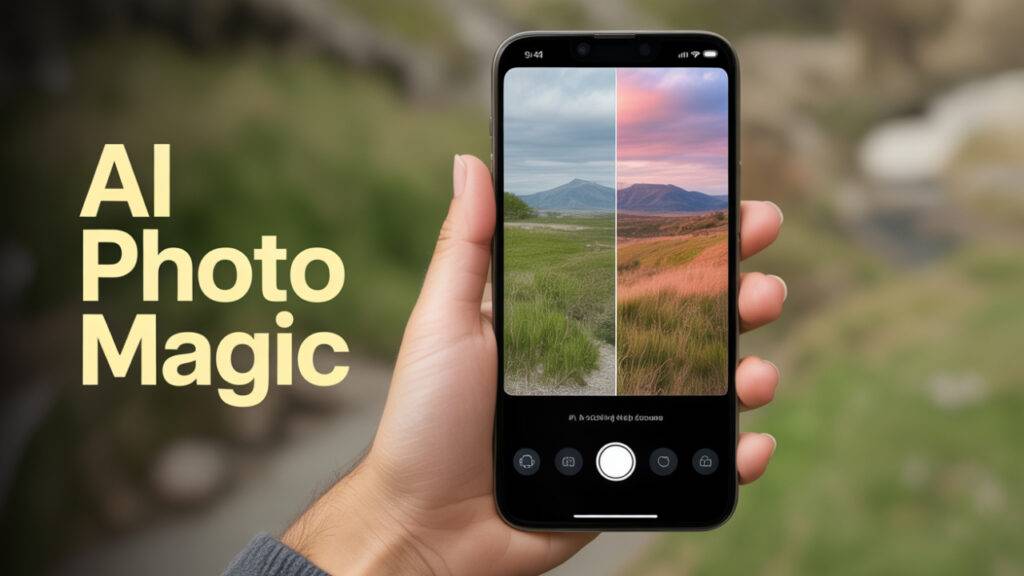
AI Mobile Photography in 2025: Taking the photo is merely the beginning. AI takes care of the editing process as well:
- Magic Eraser (Pixel): Eliminate unwanted individuals/things with a single click.
- AI Sky Replacement: Replace dull skies with dramatic ones in an instant.
- Generative Fill (Samsung One UI): Fill in image background or cropped regions.
- AI Portrait Relighting: Change direction of light, mood, and exposure—after shooting.
Other editing apps like Adobe Lightroom Mobile, Snapseed, and built-in galleries now include AI-driven presets and auto-correction that learns your style.
5. AI-Driven Zoom and Detail Recovery
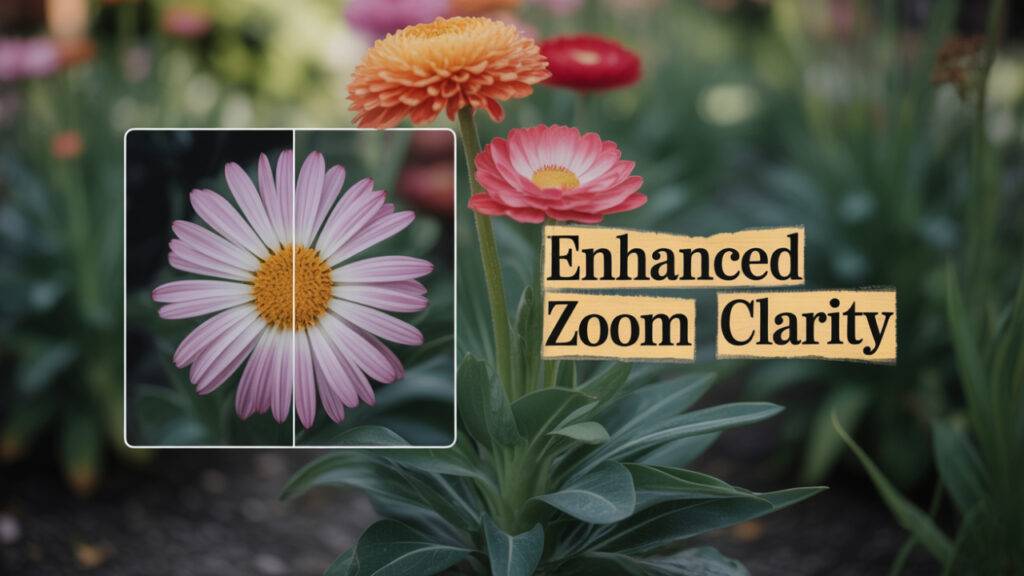
AI Mobile Photography in 2025: Smartphones can zoom deeper than ever due to AI.
- AI Super-Resolution: Phones like the Galaxy S26 Ultra use AI to reconstruct lost detail from digital zoom.
- AI Texture Recovery: Artificial intelligence computes missing texture and reconstructs elements like fabric or foliage.
- Video Zoom Tracking: AI tracks moving subjects and maintains them in focus, even at 20x or 50x zoom.
2025 phones digitally zoom 100x, and the images are even usable thanks to deep learning.
6. Real-Time AI Filters and AR Effects
AI Mobile Photography in 2025: AR and AI are merging in real time:
- AI Beauty Filters: Automatically adjust skin tone, lighting, and blemishes.
- AI Makeup & Outfit Try-ons: Overlay realistic makeovers live in the camera preview.
- AR Backgrounds & AI Green Screen: Replace or hide backgrounds on video calls or selfies without hardware depth cameras.
Apps like Instagram, TikTok, and CapCut have heavily employed AI-driven filters to make content look professional with minimal effort.
7. AI-Sourced Photography Styles
AI Mobile Photography in 2025: Smartphones don’t merely edit—imagine creating styles:
- AI Style Transfer: Turn an ordinary photo into an oil painting, anime border, or film still.
- Mood-Based Color Grading: Upload a photo, choose a mood (moody, vintage, or warm), and AI adds matching tones.
- AI Avatars & Lenses: Stylized one-click portraits or avatars from selfies.
Apple and Google now let you train your own AI style based on a handful of reference photos and create a personal visual aesthetic for your content.
AI Mobile Photography: Backstage
What’s powering all this?
- Neural Processing Units (NPUs): Dedicated AI processors on smartphones like Tensor G3, A18 Pro, and Snapdragon 8 Gen 4.
- On-Device Machine Learning: Cloud not needed. Your phone figures out your editing habit and changes in response.
- RAW + AI Fusion: Some phones capture AI-enhanced RAW, uniting processing capabilities with editing liberty.
The magic is created by combining data science with creative intelligence. Your smartphone in 2025 is an artist and a camera in one.
Leading Smartphones in AI Photography (2025)
| Smartphone | AI Features | Notable Camera AI Capabilities |
| iPhone 16 Pro Max | A18 Neural Engine | Smart HDR 6, Deep Fusion, Photonic Engine |
| Pixel 9 Pro | Google Tensor G3 | Magic Editor, Best Take, AI skin tone rendering |
| Galaxy S26 Ultra | Snapdragon 8 Gen 4 + AI ISP | Expert RAW, AI Detail Enhancer, Object Eraser |
| Nothing Phone 3 | Nothing OS AI Layer | Scene Optimizer, AI Night Mode, Clean View |
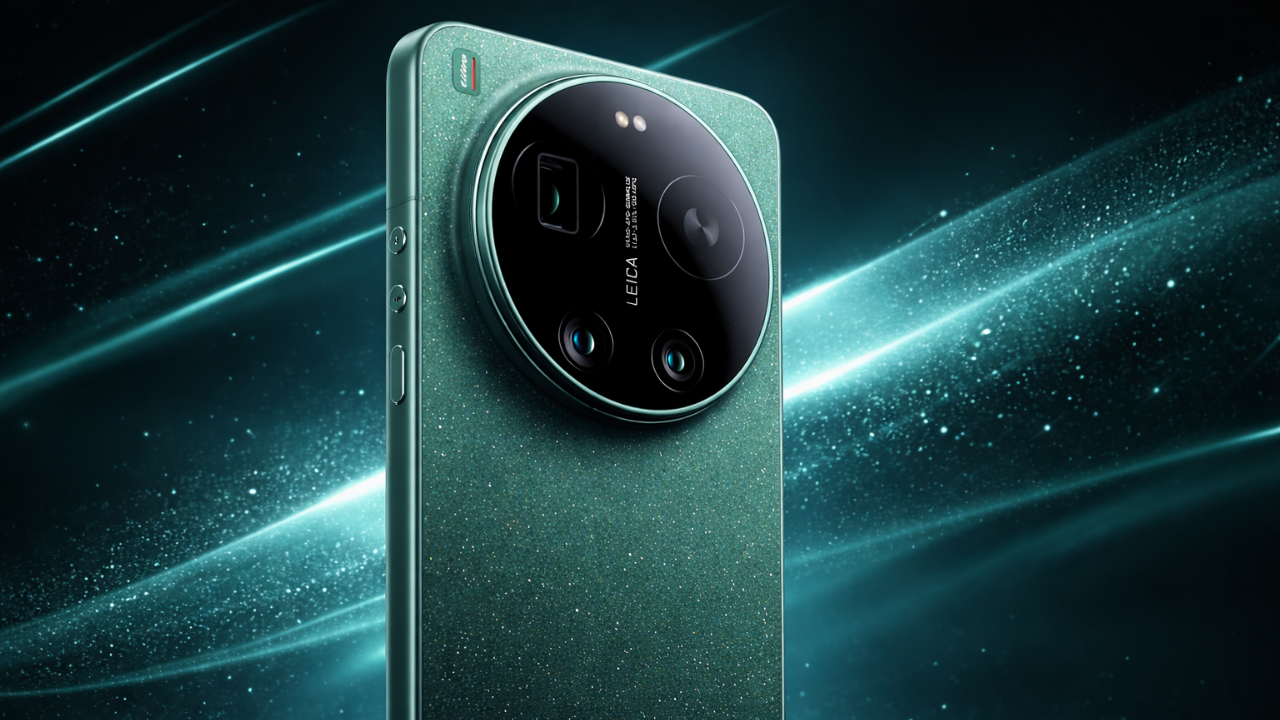
| Xiaomi 15 Ultra | Surge AI ISP | AI Super Zoom, Scene Mapping, Real-Time Grading |
The Rise of AI-Centric Camera Apps
Third-party developers are pushing AI to new heights:
- Lensa AI: One-click portrait magic
- Remini: Bring old or blurry photos back to life with AI detail enhancement
- Fotor & Prisma: Real-time AI artistic effects
- Photoleap: Background editors, sky changers, and AI selfies
Some even enable you to generate full photos from text inputs with AI image synthesis (e.g., Sora or DALL·E integrations).
Limitations & Ethical Considerations
While AI has supercharged mobile photography, it’s not without its limitations:
- Overprocessing: Sometimes AI smooths skin too much or boosts saturation, making it unrealistic.
- Bias in Algorithms: AI developed from limited data sets may not reflect rich skin color or cultural beauty.
- Deepfakes & AI Manipulation: Disinformation can be facilitated with the misuse of generative tools.
In 2025, companies are calling for more transparency in AI editing, e.g., metadata showing AI-altered images.
What’s Next for AI Mobile Photography?
Looking ahead:
- Real-time generative video editing will become mainstream.
- Personal AI photographers might guide your photos and auto-recommend the best angles or lighting.
- 360° AI Composition Assistants will educate you on how to shoot better while composing.
- AI voice-controlled shooting: “Hey phone, take a cinematic sunset in warm tones.”
The future doesn’t involve capturing moments but rather co-creating them with AI.
Final Thoughts
AI Mobile Photography: AI has completely revolutionized what smartphone cameras can do in 2025. It’s no longer about how we take pictures—it’s about what the phone can do with them.
Whether you’re clicking holiday snaps, creating viral vlogs, or just taking selfies, AI is there to help, unleashing your imagination onto the world in masterpiece form with ease. Welcome to the era of smart photography—where your phone is not just a tool but your creative partner.