Image Source: Valve
Valve Corporation gears up for a grand comeback in the console space with its next-generation hybrid, the Steam Machine Gaming Console, that merges the power of PC gaming with the simplicity of console gaming. This device marks the re-entry of Valve into the living-room gaming market after more than a decade since the original Steam Machines were discontinued, and it’s set for an early 2026 launch.
This time, though, Valve’s strategy is much sharper. The new Steam Machine is no reboot of the 2013 project but a compact powerhouse, fully redesigned on SteamOS and powered by AMD’s Zen 4 and RDNA 3 architecture. Let’s take a closer look at what makes this device one of the most anticipated releases for gamers from all over the world.
What Is the Steam Machine Gaming Console?
At its core, the Steam Machine is a PC-console hybrid that will deliver Steam’s full gaming experience right to your TV or monitor. It runs Valve’s Linux-based operating system, SteamOS, allowing access and play of the thousands of Steam titles without the need for a desktop.
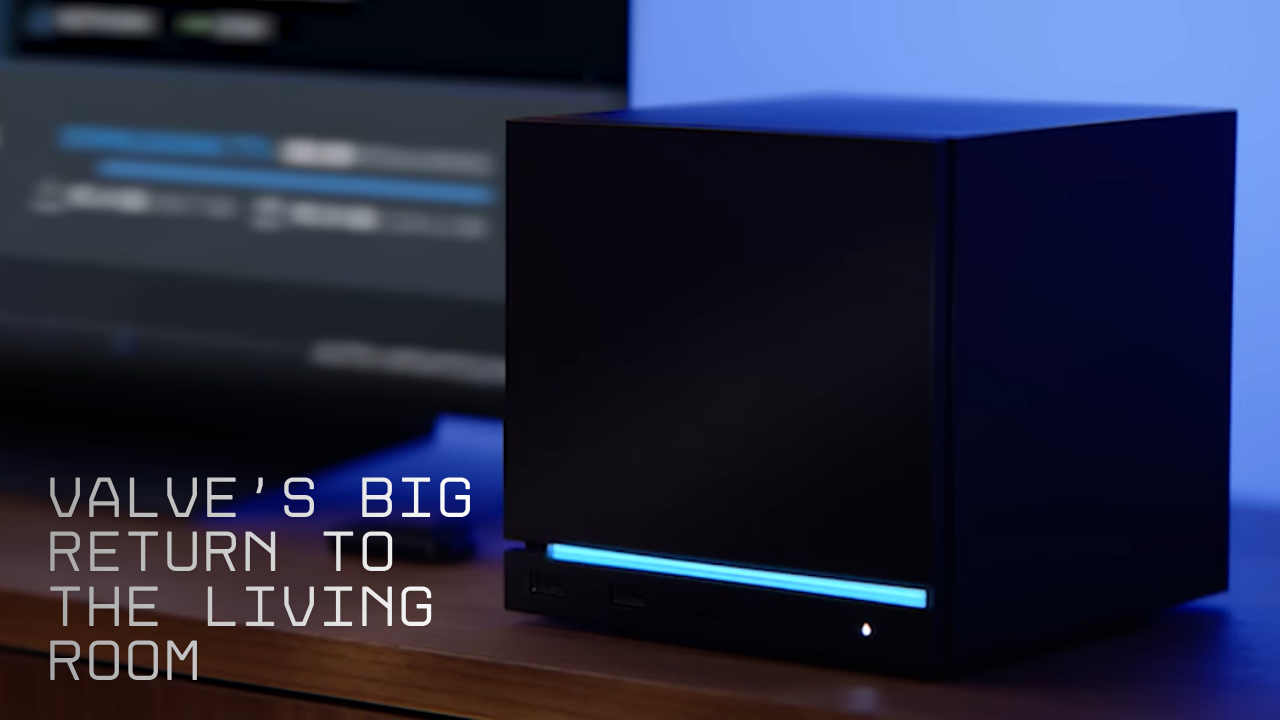
The new Steam Machine Gaming Console, designed with a minimalist cube-shaped form factor, is compact enough to fit neatly beside your TV, packing serious performance power. Valve promises performance that’s six times stronger than the Steam Deck, which puts it directly in line to compete with conventional consoles like the PlayStation 5 and Xbox Series X.

Steam Machine Specifications
| Component | Specification |
| CPU | AMD Zen 4, 6 cores, 12 threads, up to 4.8 GHz, 30 W TDP |
| GPU | AMD RDNA 3 GPU, 28 CUs, 8 GB GDDR6 VRAM, 2.45 GHz clock |
| RAM | 16 GB DDR5 |
| Storage | 512 GB or 2 TB SSD + microSD expansion |
| Connectivity | HDMI 2.0, DisplayPort 1.4, USB-C (3.2 Gen 2), USB-A, Wi-Fi 6E, Bluetooth 5.3, Gigabit Ethernet |
| Dimensions | Approx. 6.3 × 6.1 × 6 inches (cube-shaped) |
| Performance | Up to 4K @ 60 fps (with FSR upscaling); 6× more powerful than Steam Deck |
| Operating System | SteamOS – latest |
| Launch Timeline | Early 2026 |

Why the Steam Machine Matters
The new console from Valve is designed to bring PC gaming flexibility and a plug-and-play console experience a little closer together. Running SteamOS, the device gives players instant access to their entire Steam library, complete with cloud saves, community features, and achievements—all from the comfort of the couch.
For gamers who have invested heavily in Steam titles, this means no subscriptions, no digital restrictions, and complete ecosystem integration. Capable of 4K gaming at 60 fps for many titles, the Steam Machine acts as the perfect living-room centerpiece for those who want performance and simplicity all in one go.
The console’s design is also optimized for quiet, cool operation despite its power, a major upgrade over the noisy, bulky builds often associated with PC gaming rigs.
Potential Challenges
As exciting as the Steam Machine sounds, a few challenges remain. Because it’s based on Linux, game compatibility depends on Proton, Valve’s Windows-game translation layer. While Proton supports most popular games, some anti-cheat titles and features exclusive to Windows might not perform perfectly out of the box.
Another worry is VRAM capacity. We’re thinking that 8 GB GDDR6 VRAM will hold it back in the long run for graphically intensive 4K gaming. The other mystery is price—and what the Steam Machine will cost is likely to determine its global competitiveness as well.
Valve’s track record with hardware has gotten better, especially after the Steam Deck’s success, but sustained support and regional availability will be key factors to its adoption, especially in India.


Image Source: Valve
The Market Impact
The Steam Machine Gaming Console places Valve in direct competition with Sony, Microsoft, and even traditional PC makers. For casual gamers, it offers console convenience; for enthusiasts, it’s a route into PC performance without the clutter.
If Valve can keep the Steam Machine price accessible—ideally between the $499 to $699 range — it could carve out a unique niche as a “living-room PC for everyone.”
Its biggest advantage, however, remains freedom and flexibility: it allows users to install other operating systems, stream content, or even repurpose it as a mini PC. This could easily make it one of the most flexible gaming devices ever released.
Final Thoughts
With the Steam Machine, Valve makes its most ambitious push toward mainstream gaming since the Steam Deck—but probably its most important hardware move yet. PC power, console simplicity, and the Steam ecosystem come together in a statement on where Valve sees gaming going: a future in which flexibility doesn’t require compromise. If the price is right and game support is solid, the Steam Machine Gaming Console could very well change the way we think about living room gaming.